Aluminum product lines
From ore to finished ingot.
Select a grade below to view specifications, chemical composition, and reference photos.
Aluminum Ingots & Sows
Product: Aluminium Ingot
| Grade | Al ≥ | Fe | Si | Cu | Ga | Zn | Mg | Total impurity ≤ |
|---|---|---|---|---|---|---|---|---|
| Al99.85 | 99.85 | 0.12 | 0.08 | 0.005 | 0.03 | 0.01 | 0.004 | 0.15 |
| Al99.80 | 99.80 | 0.15 | 0.10 | 0.01 | 0.03 | 0.01 | 0.005 | 0.20 |
| Al99.70 | 99.70 | 0.20 | 0.13 | 0.01 | 0.03 | 0.02 | 0.008 | 0.30 |
- Length: 559 mm (22")
- Width: 177.8 mm (7")
- Height / Weight: 152.4 mm — 15kg to 25kg per ingot
- Purity: 99.7% Al
- Packing: 40 ingots per wooden pallet (referred to as a Bundle of Ingots)


Alumina Powder (Al2O3)
Native alumina is found as the mineral corundum. Most bauxite is refined by the Bayer process to remove impurities and produce a nominal 99.5% Al2O3 product.
Four types of alumina are generally utilized: calcined, tabular, hydrated, and synthetic boehmite. Aluminas are a family of aluminum oxides (Al2O3) that can take many forms. As a general term, "alumina" refers to the lower temperature transition alumina forms.
Chemical properties: purities available from 85% (industrial grade) up to 99.999% (high purity grade).
Physical properties: sintered pieces, targets, tumbling media, colloidal dispersion, and numerous powder granulations as small as nanoparticles.
Typical applications: refractories, abrasives, cement, slag adjusters, traditional & advanced ceramics (lamp components, mechanical and pump seals, nozzles, semiconductor equipment components, nuclear insulation, magnetic recording media, IC packages, and tool bits), aluminum chemicals, flame retardants, fillers, welding fluxes, adsorbents, adhesives, coatings, and detergent zeolites. Alumina is an excellent thermal and electrical insulator, and is extremely resistant to wear and corrosion. It is also used in ceramic injection molding.
Packaging: 50 lb. bags, poly-lined fiber drums and bulk bags, or bulk in vessel & containers.
| Property | Value |
|---|---|
| Molecular weight | 101.94 g/mol |
| Apparent density | 0.7 – 0.9 g/cm³ |
| Loose bulk density | ~0.83 – 1.01 g/cm³ |
| Max. use temperature (in air) | 1750 °C |
| Boiling point | ~2040 °C |
| Specific surface area | 0.5 – 50 m²/g |
| Thermal conductivity | 0.004 – 0.10 cal/s·cm·°C |
| Mohs hardness @20°C | 9.0 |
| pH | 7 – 9 |
| Specific gravity | 3.4 – 4.0 |
| Color | Ivory / White |
| Crystallography | Hexagonal |


Bauxite
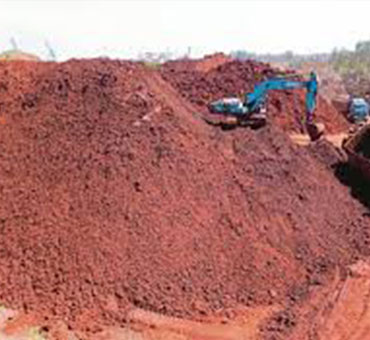
Bauxite is a sedimentary rock with a relatively high aluminium content. It is the world's main source of aluminium. Bauxite consists mostly of the aluminium minerals gibbsite (Al(OH)₃), boehmite (γ-AlO(OH)), and diaspore (α-AlO(OH)), mixed with the two iron oxides goethite and haematite, the aluminium clay mineral kaolinite, and small amounts of anatase (TiO₂) and ilmenite (FeTiO₃ or FeO·TiO₂).
Bauxite is usually strip mined because it is almost always found near the surface of the terrain, with little or no overburden. As of 2010, approximately 70% to 80% of the world's dry bauxite production is processed first into alumina and then into aluminium by electrolysis. Bauxite rocks are typically classified according to their intended commercial application: metallurgical, abrasive, cement, chemical, and refractory.
Supply: We can supply bauxite from India in bulk vessel and containers.

Sourcing aluminum?
Tell us the grade, tonnage, and destination port.
We'll confirm origin, availability, and indicative pricing directly.